Iran is losing control of the Strait of Hormuz

Published: 02:52 19 August 2026
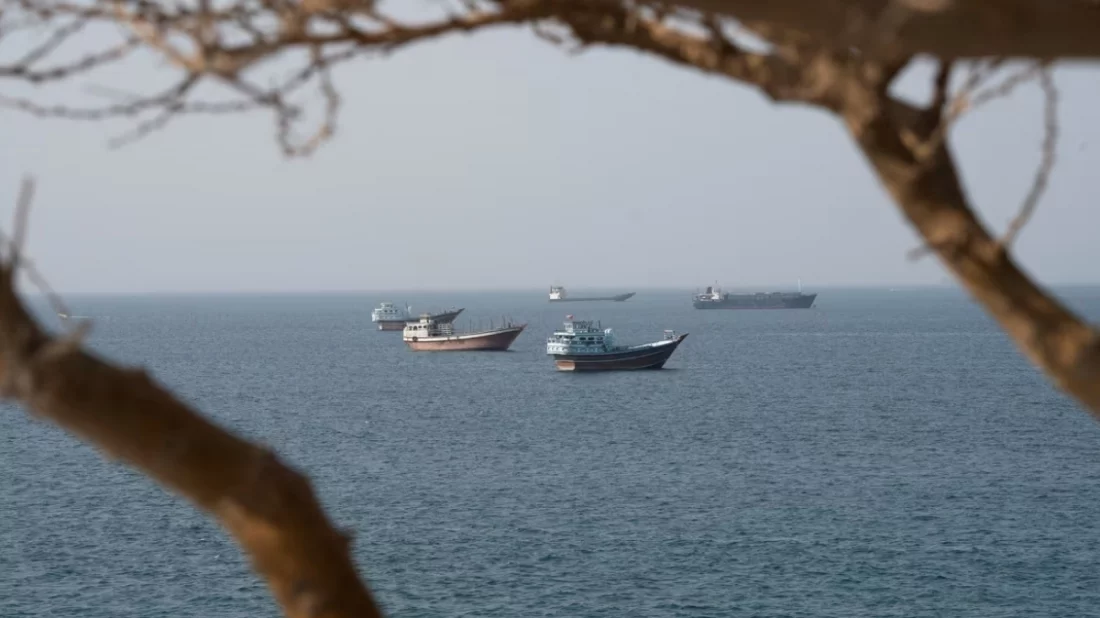
The Strait of Hormuz has become one of the focal points of the conflict between Iran and the United States. Both countries are making competing claims over control of this strategic waterway. However, recent shipping data indicates that Iran's influence in the Strait of Hormuz has decreased compared to before.
According to the shipping monitoring company Kepler, more than 80 percent of ships passing through the strait in the past two weeks have used the internationally recognized waterway near the northern coast of Oman. Iran has long opposed shipping through this route.
Despite this, many ships are now avoiding Iranian warnings and passing through the route next to Oman. Analysts believe that the US Navy's security assurances are playing a role in this change.
Shipping traffic is increasing in the Omani waterway
About a month ago, there was no significant shipping traffic in this waterway near Oman. Now the situation has started to change. Oil tankers and commercial ships are gradually using the route.
As a result, the number of ships in Iran's preferred waterway is decreasing. At the same time, the opportunity for Iran to collect money or duties from ships passing through the strait, which it has been demanding, is also being limited.
Kepler's crude oil analyst Homayun Falakshahi sees the situation as a sign of Iran's partial loss of control. However, this does not mean that full control of the strait has passed to another country.
Gulf countries are using large oil tankers
Kuwait, Saudi Arabia and the United Arab Emirates are using large oil tankers to transport oil from the Persian Gulf. These ships cross the risky area and reach the safe part of the Gulf of Oman and transfer the oil to other tankers.
Some ships have been turning off their automatic identification signals for several weeks to avoid the risk of attack. Such ships are difficult to detect with ordinary surveillance systems. However, it is possible to determine the location of some ships using advanced technology, including satellites.
The US Navy also maintains a large military presence in the Strait of Hormuz. The United States claims that it is monitoring ships in the area and trying to ensure the safe passage of non-Iranian ships. On the other hand, Iran still claims that it controls the Strait of Hormuz. The Reuters report highlights these contradictory positions of the two countries.
Oil transport has not yet returned to normal
According to estimates given by US Energy Secretary Chris Wright, an average of about 15 million barrels of oil are being transported daily through the Strait of Hormuz and its alternative routes. Before the war, this amount was about 20 million barrels per day.
Although oil transport has recovered somewhat, it has not returned to its previous normal level. The security of the strait, the threat of attacks on ships and the US-Iran dispute still create uncertainty in the global energy market.
A large part of the world's oil and liquefied natural gas used to be transported through the Strait of Hormuz in peacetime. As a result, any obstruction in this route could increase the price of oil and fuel in the international market. Recent uncertainty has also put pressure on oil prices in the international market.
US claims of full control also under question
US President Donald Trump has claimed that the US has full control over the Strait of Hormuz. However, the reality does not fully support this claim.
Iran is still capable of attacking and resisting in the area. At the same time, less oil is being transported than before the war. Therefore, it is difficult to say with certainty that the US has full control of the strait.
On the other hand, if most ships can ignore Iran's objections and use the route near Oman, then it is clear that Iran's previous control has also decreased. In other words, the Strait of Hormuz is no longer under the complete control of any one party.
Iran and Oman talks
Iran and Oman are discussing normalizing shipping in the strait without directly involving the US. The goal of these talks is to restore freedom of navigation. However, it is not yet clear whether the talks will be successful or what changes will be made to the control of the strait.
According to analysts, the claims of all parties need to be carefully considered. Based on existing shipping data, it can be said that Iran's influence and resistance in the Strait of Hormuz have decreased compared to before. However, there is no clear situation yet to conclude whether Iran has completely lost control or whether the United States has taken complete control. Related detailed report.
Advertisement
Most Readed - International



- Risk of storms in coastal areas due to low-pressure system; Warning Signal No. 3 for four seaports
- No Relief in Fish, Chicken and Egg Prices, Low-Income People Under Pressure
- "Investigation would reveal evidence of corruption against every student advisor": Nur
- Kareena Kapoor Likens Bollywood to a ‘Herd of Sheep’
- Sri Lanka reaches third consecutive Asia Cup final after beating Pakistan
- Houthi Attack on Saudi Arabia Raises Questions About Makkah Agreement's Effectiveness
- Dengue Prevention Campaign Begins Today; Prime Minister Tarique Rahman to Inaugurate
- 'Kaleen Bhaiya' Takes Theaters by Storm: ₹200 Crore in the First Week
- IMF Urges Further Cuts in Government Spending: A Warning for Bangladesh
- The story that will let you discover Dr. Muhammed Zafar Iqbal in a new light.
- 15 artists including Boga Taleb to sing in memory of Razzak Dewan
- Joining the Mecca Pact is Bangladesh's own matter: Jamaat Ameer
- Young man leaves weapon at opponent's house, calls police, hangs himself
- Three executed by lethal injection on the same day
- 600 students leave hostel in India over 'ghost scare', doctors have different explanations
- Is it possible to determine gender with a testosterone test? Find out what science says
- Prime Minister Tarique Rahman to visit India from August 20-25
- Emraan Hashmi is coming back with 'Jannat', 'Jannat 3' is coming
- Iran is losing control of the Strait of Hormuz
- NBR to be split into two independent institutions: Finance Minister